Do I Need a Licence to Fly a Drone in the UK? (2026 Answer)
No. You don’t need a licence to fly a drone recreationally in the UK. There’s no exam, no theory test, no “drone pilot’s licence” for hobby flying. That’s the thing people are really asking, and the answer is no.
What you might need is registration, which is a different, cheaper, five-minute thing. And whether you need even that comes down to one number: how much your drone weighs. Below is the 2026 version, in plain English, with the registration threshold that decides everything and a drone you can buy today that needs the least paperwork of all.
Some links below are affiliate links. As an Amazon Associate we earn from qualifying purchases — at no extra cost to you. We only recommend kit worth flying.
The short answer
For recreational flying under the CAA’s Open category, there is no licence. What can apply is registration with the CAA, and it splits into two IDs:
- Operator ID — you need this if your drone weighs 250g or more, OR has a camera (with a narrow toy exception). It costs a small annual fee, renews yearly, and the number has to be labelled on the aircraft. Think of it as registering the drone.
- Flyer ID — free, and you get it by passing a short online multiple-choice theory test. You need it if the drone weighs 100g or more (this threshold dropped from 250g to 100g on 1 January 2026), which covers nearly every popular camera drone. Think of it as proving you know the rules.
That’s it. No practical flight test, no instructor, no CAA-approved course for hobby use. The full mechanics are in our deep-dive on drone licence rules in the UK if you want the long version — this page is the quick answer.
When you DON’T need to register at all
Here’s what’s worth knowing before you spend a penny. Only a drone under 100g with no camera needs neither ID for recreational flying. A camera-less drone between 100g and 250g still needs a free Flyer ID (but no Operator ID). Add a camera and you also need the Operator ID — but a sub-250g camera drone drops out of the toughest rules that hit heavier aircraft, and you’re flying in the most permissive A1 subcategory, which lets you fly close to uninvolved people and only briefly over them (never over crowds).
This is exactly why the sub-250g class exists and why nearly every sensible first drone weighs 249g. You get a real 4K camera, GPS, the lot — and the lightest possible operational footprint. We’ve broken the whole weight class down in our sub-250g buyer guide, but the headline is simple: stay under 250g and the rules about how near people you can fly get a lot easier.
The rules you must follow regardless
No licence doesn’t mean no rules. Whatever you fly, recreationally:
- Keep it in direct line of sight — you looking at the actual drone, not just the screen.
- Stay below 120 metres (400ft) above the surface.
- Never fly over crowds or within the distances the CAA sets from uninvolved people (tighter as the drone gets heavier).
- Stay clear of airports and restricted airspace — check the Drone Assist app before you fly.
- Don’t be a nuisance over other people’s property. If you’re wondering about that, we covered drones over your garden separately.
Break these and “I didn’t need a licence” won’t help you — these apply to everyone.
The easiest drone to just buy and fly
If your whole goal is minimum faff, buy sub-250g. You’ll still register an Operator ID because these have cameras, and because they weigh over 100g you legally need the free Flyer ID too, but you avoid every heavier-category headache. Three worth your money:
The DJI Neo is the closest thing to zero-hassle flying there is. At 135g it’s featherweight, it takes off from your palm, and it’ll follow you around and land in your hand with no controller at all. If you want a drone that a total beginner can fly on day one without touching a rulebook chapter on heavier aircraft, this is it.

DJI Neo
135g, palm-launch, follows you and lands in your hand with no controller — the lowest-faff first drone going.
Check price on Amazon →Want proper GPS hold, longer range and three batteries in the box for a mid-range price? The Potensic Atom 2 is the non-DJI pick that actually flies like a grown-up drone. Sub-249g, 4K, and a genuine 3-axis-stabilised feel — it’s the value option that doesn’t feel like a toy.
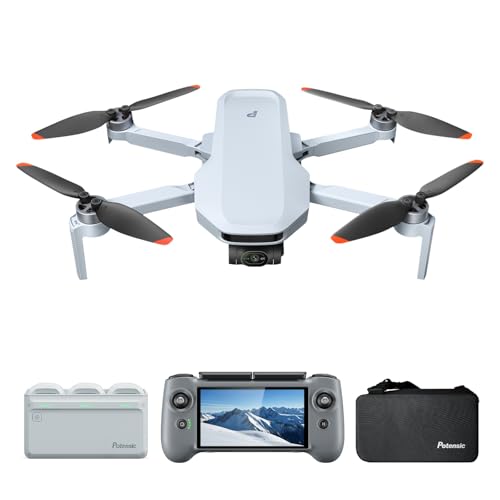
Potensic Atom 2 Fly More Combo
Sub-249g with proper GPS hold and three batteries in the box — the non-DJI value pick that flies like a grown-up drone.
Check price on Amazon →And if you want DJI’s folding form factor with propeller guards built in — safer around people and easier to justify indoors — the DJI Flip is the one. Still under 249g, still A1, still no licence, but with a fuller camera and DJI’s flight polish.

DJI Flip
Under 249g with built-in propeller guards and DJI's flight polish — safer around people, still no licence needed.
Check price on Amazon →Any of the three keeps you in the lightest, simplest legal bracket. The differences are about camera and flight time, not paperwork.
FAQ
Do I need a licence to fly a drone in my garden?
No licence. If the drone is 250g or more or has a camera you still need the Operator ID, and if it weighs 100g or more you also need the free Flyer ID, and you must keep it in sight and under 120m. A sub-250g camera drone needs both the Operator ID and the Flyer ID.
What happens if I fly without registering?
Flying a drone that requires registration without it is a criminal offence and the CAA can issue fines up to £1,000. Registration is cheap and quick — there’s no good reason to skip it.
How high can a drone legally fly in the UK?
120 metres (400 feet) above the surface, full stop, for Open-category recreational flying. That’s a hard legal ceiling regardless of what the drone is technically capable of.
Is the Flyer ID test hard?
No. It’s a free online multiple-choice test based on The Drone and Model Aircraft Code. You can retake it, and it takes most people well under an hour to pass.
Bottom line: no licence, maybe a five-minute registration, and if you buy sub-250g you’re flying in the simplest category the CAA has. Not sure a sub-250g camera is enough for a serious job like a roof check? See whether you should inspect your own roof with a drone — or if you’d rather not fly at all, get quotes from a vetted CAA pilot.
Prices and availability live on Amazon and change often — always check the current price on the listing. Certain content on this page comes from Amazon and is provided "as is". As an Amazon Associate we earn from qualifying purchases.