Are Cheap Drones Any Good? Toy vs Camera Drones
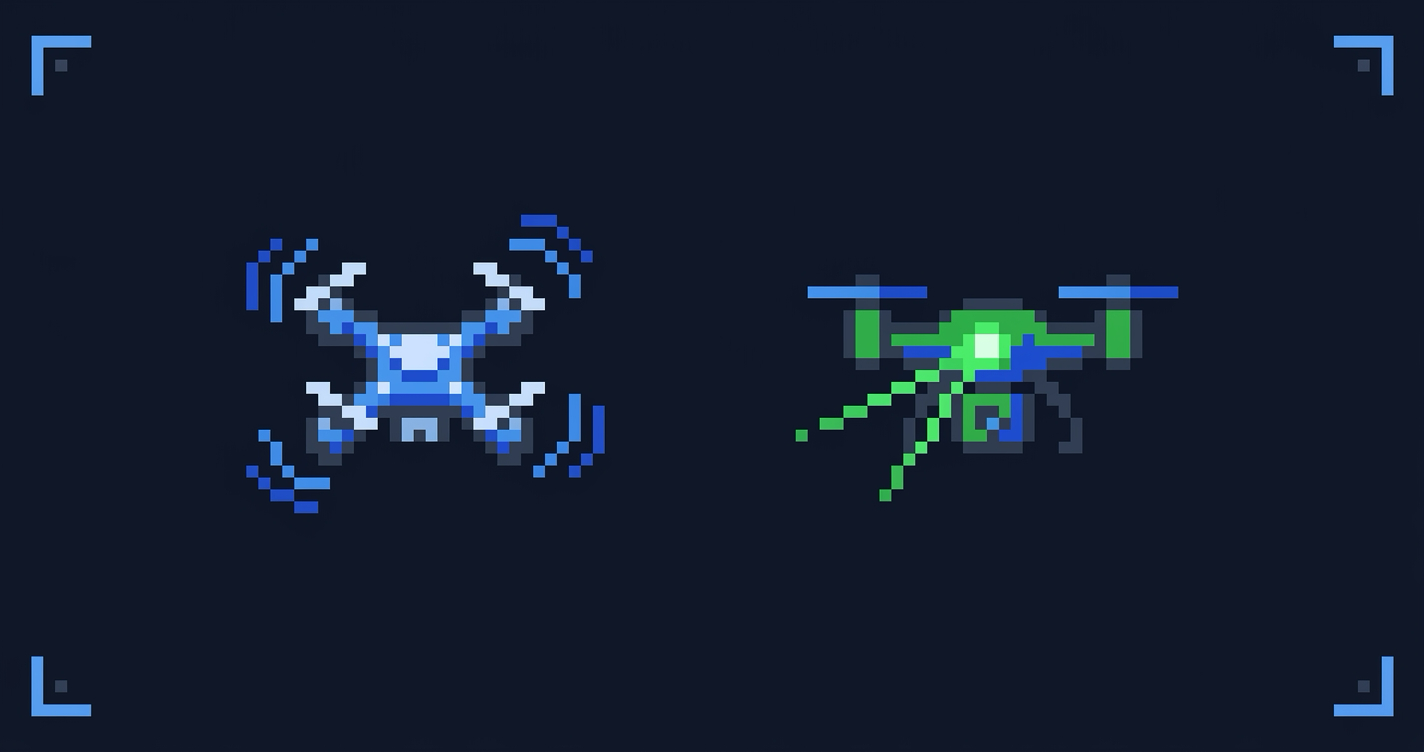
Yes — but only if you buy the right cheap drone for the right reason. A cheap drone is genuinely good at being a fun, low-stakes way to learn to fly, and genuinely bad at being a camera. The trouble is most listings sell them as both, so people spend £50 expecting footage and end up disappointed with a toy. Get clear on which job you’re buying for and cheap drones make a lot of sense; confuse the two and no price is low enough.
Toy-grade vs entry camera drone
There are two very different things sold under the word “cheap drone”, and telling them apart is half the battle.
A toy quad is the sub-£50 (often sub-£30) drone: brushed motors, no GPS, a token camera if any, a few minutes of flight per charge. It’s meant to be flown by eye, indoors or in a still garden, for fun. Judged as a toy, a good one is great — cheap thrills, easy to learn on, nothing to cry over when it hits a wall.
An entry camera drone is a different animal that starts around £90–£150. It usually has GPS hold, brushless motors, a more serious camera, and a proper app. It’s trying to be a small version of a real drone, and it mostly succeeds — steady in the air, sensible in a breeze, and capable of a decent clip. The problem comes when a toy quad is marketed with camera-drone language. The specs to check are covered in what to look for in a cheap drone; the short version is GPS, brushless motors and replaceable batteries.
Where cheap drones genuinely deliver
Cheap drones are properly good at a handful of things, and it’s worth being clear-eyed about them because they’re the reasons to buy.
Learning to fly. Stick control — throttle, yaw, pitch, roll, and keeping your head straight when the drone turns to face you — is a skill, and it’s far better learned on a £40 toy than a £700 camera drone. Crash a toy and you shrug. The muscle memory transfers straight to a bigger drone later.
Cheap fun. Buzzing round the garden, chasing the dog, first-person flying with a phone clip on the controller — a cheap drone does all of this for the price of a takeaway or two. As a gift or a rainy-Sunday distraction, it’s hard to beat.
Low stakes. You’ll crash your first drone. Everyone does. Doing it on something cheap and replaceable, rather than something that costs a week’s wages, is genuinely the sensible way in. Many experienced pilots keep a cheap knockabout drone precisely because they don’t have to care about it.
Where they fall down
The honest list of weaknesses, so nobody’s surprised.
Wind. This is the big one. Light, cheap drones get shoved around by a breeze that a heavier drone wouldn’t notice, and a non-GPS toy in wind is nearly unflyable — it drifts and you spend the whole flight fighting it. Even sub-250g camera drones struggle here, which is why flying a drone in wind is worth reading before you fly one on a blustery British afternoon.
The camera. No cheap drone has a proper stabilising gimbal, so footage wobbles and judders. The resolution number on the box is marketing; the image behind it is small-sensor and shaky. Fine for a laugh, not for anything you’d want to keep.
Range and reliability. Cheap radios drop signal sooner, cheap batteries fade faster, and cheap motors wear out. A toy quad is not built to last for years, and the ongoing extras — spare props, spare batteries, a case — add up. That’s true of every drone, mind; the hidden costs of owning a drone catch out buyers at every price.
What each budget actually buys
Rough guide, because it helps to have numbers.
Under £50 buys a toy: brushed motors, no GPS, minutes of flight, a camera that’s really a novelty. Great indoors and in still air, hopeless in wind, and not built to last. Buy it as a toy and you’ll be happy.
Around £100–£200 is where cheap starts becoming capable. GPS hold, brushless motors, Return to Home, a camera that manages a watchable clip in good light, and often a sub-250g weight that simplifies the UK rules — though a camera still means registering for a Flyer ID (required from 100g) and an Operator ID (£12.34 a year), so sub-250g doesn’t mean no registration. This is the sweet spot for a first drone you’ll actually keep flying, and it’s where our best cheap drones in the UK picks concentrate.
Above that you’re into mid-range territory — proper gimbals, longer range, footage you’d share — and whether that’s worth it depends entirely on what you’re flying for.
When cheap is the right call
Cheap is the right call more often than drone snobs admit. Buy cheap if you’re learning, if it’s a gift or for a child, if you mostly fly indoors or in the garden, or if you just want the fun of flying without a serious camera. In all of those cases a £40–£150 drone is not a compromise — it’s the correct tool.
Buy more only if the camera is the actual point: if you want stable footage to share, longer flights, real range, or reliability for work. Trying to make a cheap drone do a mid-range drone’s job is the one path that ends in disappointment. Match the drone to the reason and cheap drones are, genuinely, good.
FAQ
Are cheap drones worth buying at all?
For learning to fly, for fun, for a gift, or for a child, absolutely — a cheap drone does those jobs well and cheaply. Where they fall down is as cameras and in wind. Buy one for the flying rather than the footage and you’ll get your money’s worth; buy one expecting shareable video and you won’t.
What’s the difference between a toy drone and a camera drone?
A toy drone (usually under £50) has brushed motors, no GPS and a token camera — it’s flown by eye for fun. An entry camera drone (from around £90–£150) adds GPS hold, brushless motors and a more serious camera, so it holds position and takes a watchable clip. Both are “cheap”, but only one is trying to be a real drone.
Can cheap drones fly outside in the wind?
Poorly. Light drones get pushed around by breezes heavier drones ignore, and a cheap non-GPS toy in wind is nearly unflyable. Even sub-250g camera drones struggle in a stiff British wind. For outdoor flying, choose a cheap drone with GPS at the least, and pick calm days until you’ve got the hang of it.
How much should I spend on a first drone?
If it’s a toy or a child’s, £30–£50 is plenty. If you want a first drone you’ll keep flying — one that holds position, resists a breeze and takes a decent clip — the £100–£200 band is the value sweet spot. Spend beyond that only if stable, shareable footage is your actual goal.
Weighing it up? Our guide to the best cheap drones in the UK shows which budget models are worth your money and which to skip.