CPL vs ND Filter for Drones: What's the Difference?
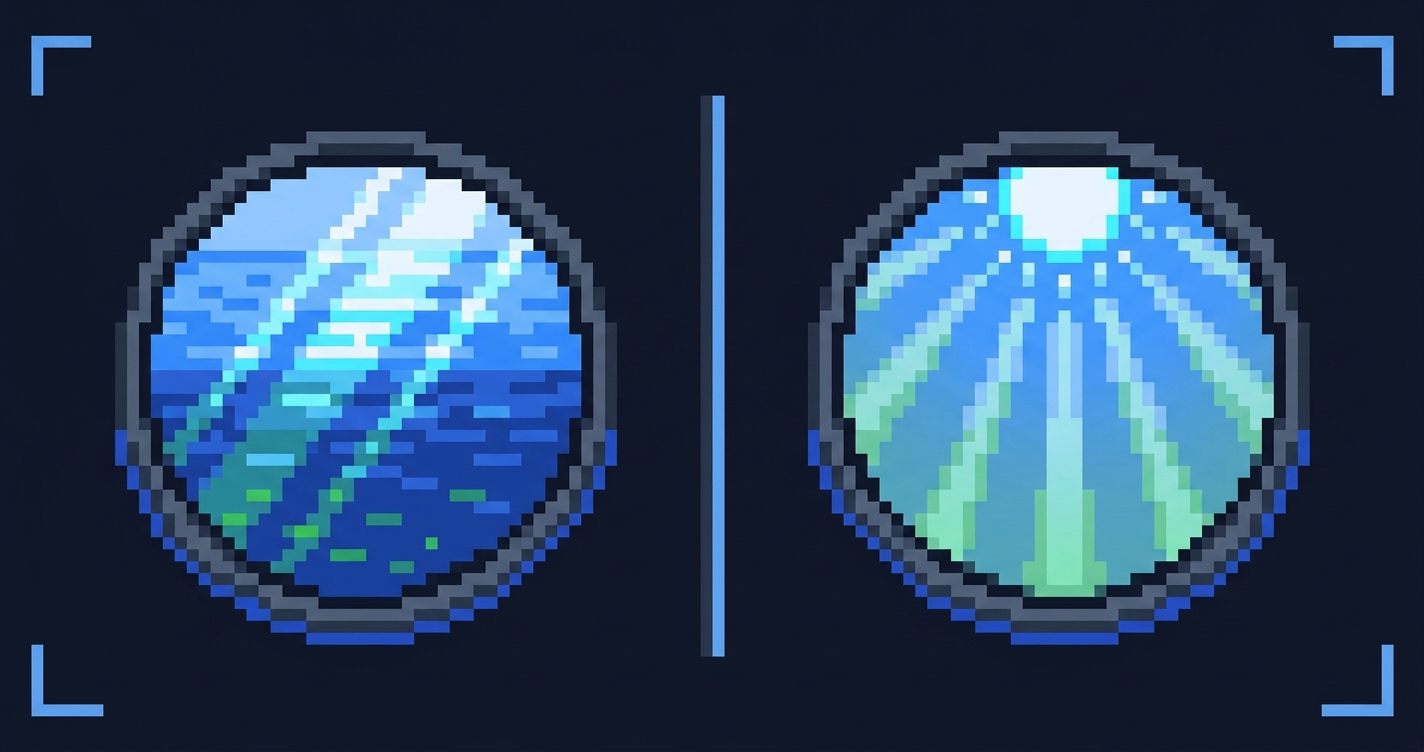
They look almost identical clipped on the front of the camera, but an ND filter and a CPL do completely different jobs. An ND darkens the whole image evenly so you can slow the shutter for smooth video. A CPL — a circular polariser — cuts reflections and glare off water, glass and wet surfaces, and deepens a pale sky. One is about motion; the other is about reflections. Knowing which does what stops you buying the wrong thing, and tells you when it’s worth stacking the two together.
What an ND filter does
An ND (neutral density) filter is plain dark glass. It reduces the amount of light hitting the sensor, evenly and without changing colour. That’s its only trick — and it’s a valuable one, because in bright daylight the camera would otherwise be forced to race the shutter up to keep the exposure correct, which freezes each frame and makes video strobe.
Slow the shutter back down to about double your frame rate and motion looks natural again — the shutter speed rule in action. The ND is what lets you obey that rule in sunlight. It does nothing about reflections, nothing about sky, nothing about glare. Pure light reduction. If the whole concept is new, what ND filters are and whether you need them is the place to start.
What a CPL does
A CPL — circular polarising filter — filters light by the angle it’s vibrating at, not just the amount. Rotate it and it selectively blocks polarised light, which is exactly the light that reflects off non-metallic surfaces. The effect is real and often dramatic:
- Kills glare off water and glass. A CPL can turn a white, blown-out lake or a mirror-bright glass roof into a surface you can actually see into — fish, riverbed, the tiles behind the reflection. That last one is genuinely useful if you’re inspecting your own roof with a drone and the sun is bouncing off wet slate.
- Deepens blue skies and lifts clouds. Rotated right, it darkens a washed-out sky to a richer blue and makes white cloud pop.
- Cuts haze and saturates colour. Wet grass, foliage and roads stop bouncing a dull sheen and their colours come up cleaner and more saturated.
A CPL also happens to block a stop or two of light, so it dims things slightly as a side effect — but that’s incidental. Its real job is managing reflections, which an ND simply cannot do.
Side by side
| ND filter | CPL (polariser) | |
|---|---|---|
| Main job | Reduce light to slow the shutter | Cut reflections and glare |
| Best for | Smooth video in bright light | Water, glass, wet roads, pale skies |
| Effect on sky | None | Deepens blue, lifts cloud |
| Effect on motion blur | Restores natural blur | None directly |
| Needs rotating? | No | Yes — rotate to dial the effect |
| Colour | Neutral (no change) | Can richen colour and cut haze |
The one-line version: reach for an ND when the problem is choppy video in bright sun, and a CPL when the problem is glare, reflections or a washed-out sky.
The ND/PL combo — and when to use it
Because they solve different problems, you can get filters that do both: an ND/PL, which is a polariser built into a darkened filter. On a bright day over water — a coastal reveal, a shot across a reservoir — this is the ideal tool: the ND half keeps your shutter slow for smooth motion, the PL half cuts the sea glare so the water reads as water instead of a sheet of white.
They’re sold in the same strength steps as plain NDs — ND16/PL, ND32/PL and so on — so you match the ND number to the light exactly as you would with the ND8-to-ND64 strengths, and get the polarising effect on top. If you often fly near water or glass in good light, an ND/PL set earns its place fast.
When NOT to use a CPL
A polariser isn’t a “leave it on” filter, and drones expose its one real weakness.
The polarising effect depends on the angle to the sun, and it’s strongest at 90 degrees to it. On the ground with a fixed camera that’s manageable. On a drone doing a sweeping 180-degree turn, the angle to the sun changes constantly through the shot — so a CPL can leave you with an uneven sky that’s deep blue on one side of the frame and pale on the other, or a band of unnatural darkness that swings across as you rotate. It looks wrong and it’s a pain to fix in editing.
So the rules of thumb:
- Don’t fit a CPL for wide panning shots or full orbits — the sky will go blotchy. A plain ND is the safer choice there.
- Do use it for static or gently-moving shots where you can set the rotation and the sun angle stays roughly constant — hovering over a river, a slow line across a wet field.
- Don’t leave it rotated to maximum by default. Dial the effect back so the sky still looks natural; full-strength polarisation on a drone often looks overcooked.
- On dull overcast days, skip it. There’s little glare to cut and little sky to deepen, so you’re just losing a stop of light for nothing.
Used with judgement a CPL is a lovely tool. Used blindly it gives you patchy skies. An ND, by contrast, you can pretty much always leave to do its quiet job.
FAQ
What’s the difference between a CPL and an ND filter for drones?
An ND filter darkens the whole image evenly to let you slow the shutter for smooth video, while a CPL cuts reflections and glare off water and glass and deepens pale skies. One manages light and motion; the other manages reflections. They solve different problems, so which you need depends on the shot.
Do I need a CPL filter for my drone?
Only if you often shoot over water, glass or wet surfaces, or want richer, less-hazy skies — that’s where a CPL earns its place. For general video the priority is an ND to keep motion smooth; a CPL is a specialist addition rather than a must-have for most flyers.
Can I use an ND and a CPL filter together?
Yes — combined ND/PL filters build a polariser into darkened glass, so you get both effects at once. They’re ideal over water in bright light: the ND half keeps the shutter slow for smooth motion while the PL half cuts the glare. They’re sold in the same strength steps as plain NDs.
When should I not use a CPL on a drone?
Avoid a CPL for wide panning shots and full orbits, because the polarising effect changes with the angle to the sun and leaves the sky blotchy — deep blue on one side, pale on the other. Skip it on dull overcast days too, when there’s little glare to cut and you’d just lose light.
For most flyers the everyday priority is a good set of plain ND filters, and matching them to a Mini-class drone is exactly what the best ND filters for the DJI Mini 4 Pro guide is for.