What Are ND Filters for Drones — and Do You Need Them?
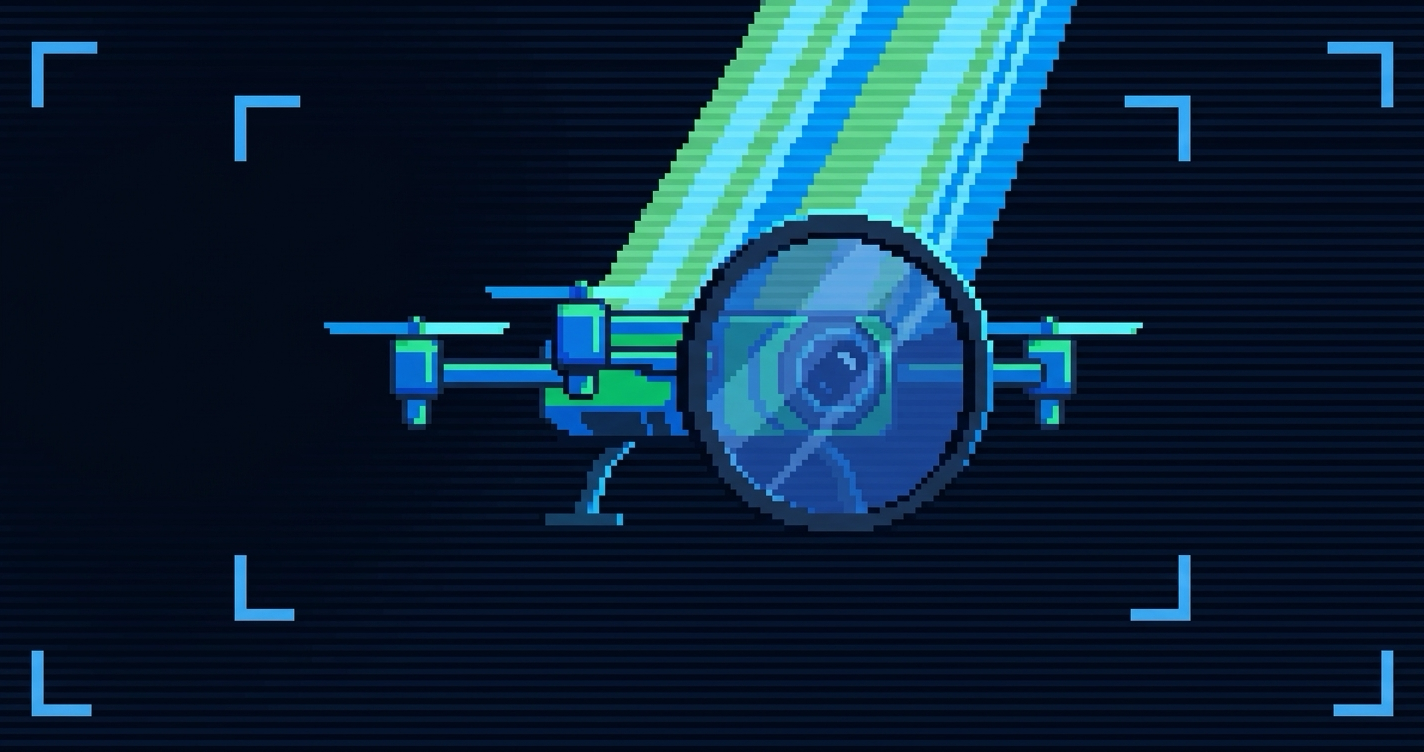
An ND filter is a piece of dark glass that clips over your drone’s camera and cuts the amount of light reaching the sensor — sunglasses for the lens, nothing more. It doesn’t change colour, it doesn’t sharpen anything, and it won’t rescue a bad shot. What it does is let you slow the shutter down on a bright day, and that one change is the difference between video that glides and video that looks like a slideshow. If you shoot video, you probably want a set. If you only take stills or fly for mapping, you can usually leave them at home.
That’s the short answer. Here’s why it works, and how to tell which camp you’re in.
What “ND” actually means
ND stands for neutral density. “Neutral” is the important word: a good ND filter darkens the whole image evenly without tinting it blue, brown or magenta. Cheap ones fail exactly here, casting a colour you then have to fight in editing.
The strength is measured in stops of light. An ND8 blocks three stops — roughly an eighth of the light. An ND16 blocks four, an ND32 five, an ND64 six. Each step halves the light again. The stronger the filter, the darker the day it’s built for. There’s a whole breakdown of which ND strength suits which light if you want to skip straight to picking one.
The filter itself is tiny — a threaded or magnetic ring that snaps over the gimbal camera on a DJI Mini, Air or Mavic. Fitting one takes about five seconds. The trick is knowing when it earns its place.
Why bright light wrecks video without a filter
Here’s the mechanism, because it’s the whole reason ND filters exist.
Smooth, natural-looking motion in video comes from a shutter speed set to roughly double your frame rate. Shoot at 25 frames per second and you want a shutter of about 1/50th of a second. That’s the 180-degree shutter rule, and it’s what gives footage that gentle, cinematic motion blur your eye reads as “real”.
Now point the drone at a bright British afternoon. To keep the picture from blowing out white, the camera has to cut the light somehow — and with the aperture fixed on most drones, its only lever is shutter speed. So it races the shutter up to 1/500th, 1/1000th, 1/2000th. The exposure is correct, but every frame is now a frozen, blur-free snapshot. Stack those razor-sharp frames together and panning motion goes staccato — that stuttery, juddery look people call “the video jitters”. If your footage does exactly that, the causes-and-fixes rundown walks through it.
An ND filter fixes this at the source. Darken the incoming light by five or six stops and the camera can hold that 1/50th shutter even in full sun. Pick a strength that suits the light — same brightness on screen, motion blur back, footage flowing.
Who actually needs them — and who doesn’t
You shoot video: yes. If you fly to capture footage — reveals over a coastline, a slow push toward a building, anything with movement — ND filters are the cheapest upgrade that visibly improves your results. Not “nice to have”. The single accessory that most changes how professional your video looks.
You shoot stills: usually not. Photos are one frozen instant anyway, so shutter-induced judder doesn’t exist. You can drop the ISO and let the shutter run fast with no penalty. The exception is long-exposure stills — silky waterfalls, blurred sea, light trails — where a strong ND lets you drag the shutter to a second or more in daylight. That’s a niche, but it’s a lovely one.
You fly for mapping or surveys: no. Photogrammetry and orthomosaics want crisp, high-shutter frames with no motion blur at all — the exact opposite of what an ND gives you. Fitting one here is actively counterproductive. It’s worth understanding how accurate a drone survey really is before you start bolting glass onto a mapping rig; sharpness is the goal there, not smoothness.
The UK reality: half your flights are overcast
Here’s the honest bit the marketing skips. A lot of ND advice comes from California, where every day is ND32 weather. Fly in the UK and a good chunk of the year is flat grey cloud, and on a genuinely overcast day you may need no filter at all — the cloud is already doing the dimming.
So don’t buy the darkest filter in the shop and leave it glued on. A practical UK kit is a small set — an ND8 for overcast, an ND16 for cloudy-bright, an ND32 for proper sun, maybe an ND64 for high summer and snow glare — and the habit of swapping to match the sky. Bright hazy afternoon, reach for the ND32. Murky drizzle over the moors, you might fly bare. It takes ten seconds to change and it’s the difference between guessing and knowing.
Keep them clean, too. A smeared ND filter is worse than no filter — soft, flarey, and hazy in exactly the conditions you fitted it for. A microfibre cloth in the case sorts it.
FAQ
Do I really need ND filters for my drone?
If you shoot video, yes — they’re the cheapest accessory that visibly improves your footage, because they let the camera hold a slow enough shutter for natural motion blur in bright light. If you only take stills or fly for mapping and surveys, you can skip them entirely; sharp frozen frames are exactly what you want there.
Will an ND filter make my photos better?
Not for ordinary stills. A photo is a single frozen moment, so the motion-blur problem NDs solve simply doesn’t apply. The one exception is long-exposure daytime shots — blurred water, moving cloud, light trails — where a strong ND lets you use a slow shutter without overexposing.
Do ND filters change the colour of my footage?
A good one shouldn’t — “neutral density” means it darkens evenly without a colour cast. Cheap filters are the ones that tint everything blue or brown, which you then have to correct in editing. Buy a reputable set and colour stays true.
What ND strength should I start with?
For most UK flying, an ND16 covers cloudy-bright days and an ND32 covers proper sun, so those two handle the majority of conditions. Add an ND8 for overcast and an ND64 for high summer or snow glare if you fly in extremes.
Once you’ve decided you want a set, the next question is which strengths to actually buy for a Mini-class drone — which is exactly what the best ND filters for the DJI Mini 4 Pro guide sorts out.