Best Sub-250g Drones UK 2026: Fly Without the Registration Faff
The single most useful number in UK drone law isn’t 120 metres or 50 metres. It’s 250 grams — but not for the reason most guides claim. Since 1 January 2026 the Flyer ID theory test is legally required for any drone weighing 100g or more, so nearly every sub-250g camera drone now needs one (it’s free). What staying under 250g really buys you is the operational freedom of the A1 subcategory: you can fly closer to people, over more places, with far less faff than anything heavier.
So before you spend a penny, the smart move is to buy inside the 250g class on purpose. Below are the drones that do it properly in 2026 — ranked on what actually matters: camera, wind resistance, flight time, and whether the sub-250g weight is real or a marketing rounding trick.
Some links below are affiliate links. As an Amazon Associate we earn from qualifying purchases — at no extra cost to you. We only recommend kit worth flying.
Why 250g is the magic number
UK drones split into weight classes, and 250g is the first and most important cliff edge for the rules about people. Under it, in the Open category A1 subcategory, you’re allowed to fly over uninvolved people (though never over crowds). Anything from 250g up to 500g pushes you toward A2 territory, closer-to-people restrictions, and more study. Cross into heavier gear and it only gets stricter. One thing 250g does not get you out of, though, is the Flyer ID: since 1 January 2026 that free theory test is required for any drone of 100g or more, so nearly every camera drone here needs one.
The catch: manufacturers know this, so “under 249g” is now a headline spec. Believe the number, but check it includes the battery and any required guards — a few sub-250g claims quietly assume the lightest possible config. For the full breakdown of what each weight class actually permits, read our UK drone laws guide, and if you’re unsure whether you need to register at all, the drone licence explainer settles it in five minutes.
1. DJI Mini 4 Pro — the one to buy if you’re serious
This is the best sub-250g drone on the market and it isn’t close. You get a 1/1.3-inch sensor, true 4K/60fps HDR, and — the part that matters — omnidirectional obstacle sensing, which no other drone this light offers. That means it actually stops before it flies into a tree, which is worth the premium alone for anyone new to sticks. It handles wind better than a 249g drone has any right to, and the vertical shooting is genuinely useful if you post to phones.
It sits in the premium tier, and it earns it. If you want one drone that’ll still impress you in three years, this is it.

DJI Mini 4 Pro (RC-N2)
Best sub-250g drone full stop — omnidirectional obstacle sensing no rival this light has, plus a proper 1/1.3-inch sensor and 4K/60fps HDR.
Check price on Amazon →2. DJI Mini 3 — the value sweet spot
The Mini 3 is the Mini 4 Pro with the clever safety brain removed and the price cut accordingly. You keep the same excellent 1/1.3-inch sensor, 4K HDR, and that class-leading ~38-minute flight time. What you lose is the obstacle avoidance and 60fps. For a lot of people that’s a fair trade — if you fly with a bit of care you’ll rarely miss the sensors, and the image quality is nearly identical.
Mid-range money for image quality that punches into the premium bracket. The obvious pick if the Mini 4 Pro feels like too much.

DJI Mini 3
The Mini 4 Pro's image quality and ~38-min flight time minus the safety brain and price — the value sweet spot.
Check price on Amazon →3. DJI Flip — best for travel and total beginners
The Flip is DJI’s odd, likeable one: full propeller guards built in, so it’s the only sub-250g DJI you can hand to a nervous first-timer without wincing. Fold it up and it’s genuinely pocketable. It carries the same 1/1.3-inch sensor as the Mini 3 line, so the footage is excellent, and the guards mean you can fly it indoors and around people with far less anxiety. The trade-off is the guards catch wind, so it’s happier on calm days.
Mid-range. If your main worry is crashing it in week one, buy this.

DJI Flip
Built-in prop guards make it the only sub-250g DJI you can safely hand a nervous first-timer, with the same excellent sensor as the Mini 3.
Check price on Amazon →4. DJI Neo — the palm-launch pocket rocket
At 135g the Neo is the lightest here by a mile, and it does something none of the others do: takes off from your palm and follows you with no controller at all. It’s built for quick selfie shots, vlogging, and “grab it and go” flying. The 4K is fixed-lens single-axis stabilised rather than a full 3-axis gimbal, so it’s not a landscape-photography tool — but for social clips and messing about it’s brilliant, and it’s the cheapest way into the DJI ecosystem.
Budget tier. Not your only drone, but a fantastic second one — or a first for someone who just wants shots of themselves.

DJI Neo
At 135g it palm-launches and follows you controller-free — a brilliant, cheap second drone for social clips.
Check price on Amazon →5. DJI Mini 4K — the no-nonsense starter
If you want a proper 3-axis gimbal, stable 4K, and DJI reliability for the least money, the Mini 4K is the honest answer. It’s older tech under the shell but it flies well, holds a shot, and does everything a beginner needs without the Neo’s fixed-lens compromise. No obstacle sensing and a smaller sensor than the Mini 3, but you’re paying budget money for a drone that just works.
Budget tier, sub-250g, 3-axis gimbal. The safest first drone for someone who wants results, not a hobby.

DJI Mini 4K
The cheapest reliable sub-250g drone with a real 3-axis gimbal — the honest no-nonsense starter.
Check price on Amazon →6. Potensic ATOM — the DJI alternative worth a look
Most non-DJI sub-250g drones are toys. The Potensic ATOM isn’t. It has a real 3-axis mechanical gimbal, 4K, and GPS return-to-home, at a price that undercuts DJI meaningfully. The app and ecosystem aren’t as polished, and resale value is weaker, but if you want a capable sub-250g flyer and refuse to pay the DJI tax, this is the one to shortlist.
Budget-to-mid tier. The credible alternative if you’re allergic to buying DJI.

Potensic ATOM
A rare non-DJI drone with a genuine 3-axis mechanical gimbal and GPS RTH — the credible alternative if you refuse to pay the DJI tax.
Check price on Amazon →One accessory you’ll actually use: ND filters
Every drone above shoots better video with ND filters, and it’s the one accessory people regret not buying sooner. Drone cameras have a fixed aperture, so in bright daylight your shutter runs too fast and footage looks stuttery and unnaturally sharp. Screw on the right ND and you get that smooth, cinematic motion blur instead. This Freewell set covers the Mini 4 Pro across a full range of light conditions.
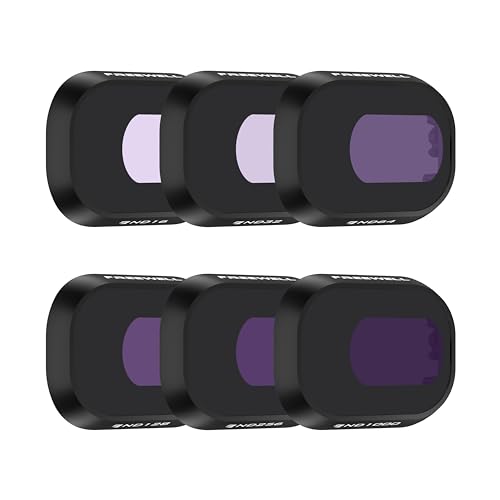
Freewell 6-Pack ND Filters (Mini 4 Pro)
Fixed-aperture drone cameras need ND filters for smooth cinematic footage in daylight — the accessory people regret skipping.
Check price on Amazon →FAQ
Do I need to register a sub-250g drone in the UK?
If it has a camera, yes — and since 1 January 2026 you need both. You register once for an Operator ID (£12.34 a year, labelled on the drone) and you also sit the free Flyer ID theory test, because that test now applies to any drone weighing 100g or more and almost every sub-250g camera drone is over that. Only a camera-less drone under 100g needs neither. A camera-less drone between 100g and 250g needs a Flyer ID but not an Operator ID.
Can I fly a sub-250g drone over people?
In the Open category A1 subcategory you may fly over uninvolved people, but never over assemblies or crowds, and you should avoid flying directly over anyone unnecessarily. Sub-250g gives you the most freedom here, but common sense and the 120m height limit still apply.
Is the DJI Mini 4 Pro really under 250g?
Yes — it weighs in just under 249g with its standard battery. Note that the higher-capacity Intelligent Flight Battery Plus pushes it over 250g, which moves it into a stricter class, so stick with the standard battery to stay in the light-touch rules.
What’s the best sub-250g drone for a complete beginner?
The DJI Flip, thanks to its built-in propeller guards, or the DJI Mini 4K if you want the cheapest reliable gimbal drone. Both fly stably and forgive mistakes better than a bare-prop drone.
Still deciding between DJI and the cheaper alternatives? Our drone laws guide covers exactly what each weight class lets you do, so you can match the drone to how you actually want to fly. And if you’d rather hand a roof or property job to a vetted pilot than learn to fly yourself, our drone roof survey service does it properly, with insurance and CAA permissions sorted.
More free sub-250g guides: why 250g matters, do they need registration, sub-250g vs heavier drones, which DJI sub-250g to buy, and do you need drone insurance.
Prices and availability live on Amazon and change often — always check the current price on the listing. Certain content on this page comes from Amazon and is provided "as is". As an Amazon Associate we earn from qualifying purchases.