Which DJI Sub-250g Drone Should You Buy? Neo, Flip or Mini
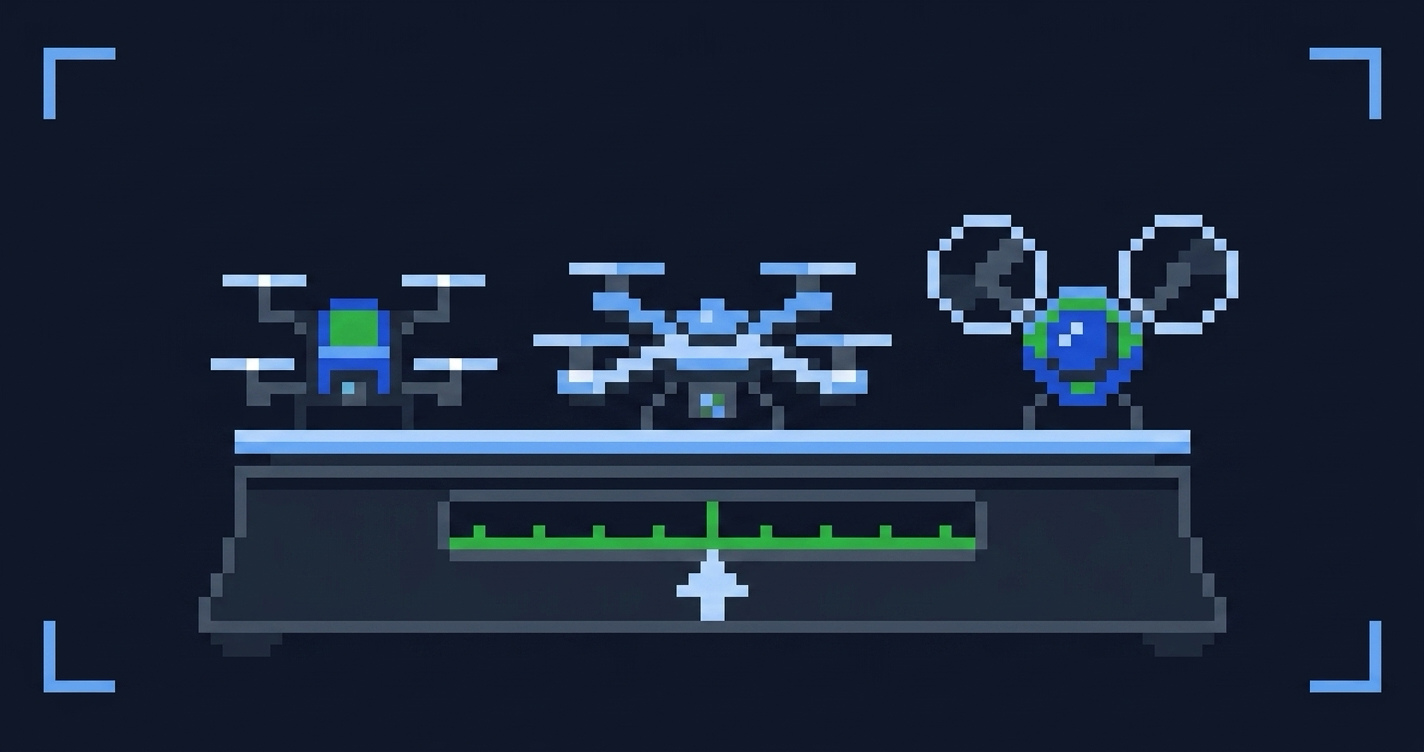
DJI makes several drones under 250g, and they’re not simply cheaper and pricier versions of one thing — they’re built for different jobs. The Neo is a hands-free selfie flyer. The Flip is a caged, self-flying middle ground. The Mini is a proper travel camera drone. Pick by what you actually want to do, not by price alone, and the choice gets simple. Here’s how the three families split, and who each one is for.
The three families, quickly
DJI’s under-250g range in 2026 sorts into three ideas:
- Neo (and Neo 2) — the featherweight selfie drone. It takes off from your palm, follows you around and lands back in your hand, no controller needed. The lightest and cheapest way into DJI, built for hands-free clips of yourself.
- Flip — the folding, prop-guarded self-flyer. It packs flat, wraps its propellers in full guards for safe indoor and close-quarters flying, and also flies itself with subject tracking and palm take-off — but carries a bigger camera than the Neo.
- Mini (Mini 4 Pro, Mini 5 Pro) — the travel camera drone. This is the “real drone” of the group: a stabilised gimbal camera, obstacle sensing, proper range and longer flight time, flown with a controller. It’s for footage, not selfies.
All three stay under the 250g line, so all three share the same lighter operational treatment — the A1 freedom to fly close to uninvolved people (never over crowds). That weight class doesn’t skip the paperwork, though: all three are over 100g, so each needs a free Flyer ID, and their cameras mean you also register for an Operator ID either way.
DJI Neo: hands-free and featherweight
The Neo is the smallest, lightest and cheapest DJI here — the Neo 2 weighs around 151g. Its whole appeal is that you don’t need to learn to fly it: launch it off your palm, let it track you, and it captures the shot on its own. Built-in storage means you can fly it without even a phone in some modes.
The trade is capability. Its camera and stabilisation are the most basic of the three, its flight time is the shortest — roughly the high teens of minutes — and being so light, it’s the most affected by wind. It’s brilliant for social clips and travelling ultra-light, but not for considered landscape work or flying in a stiff breeze. If you’re weighing the two generations, our DJI Neo vs Neo 2 comparison covers what the upgrade actually changes.
Buy the Neo if: you want effortless hands-free selfie and follow footage, the lowest price and the lightest possible kit, and you’re not chasing top image quality.
DJI Flip: the caged middle ground
The Flip sits between the Neo and the Mini. It folds flat for travel, and its defining feature is full-coverage propeller guards built into the folding design — which makes it the most forgiving of the three to fly near people, indoors or in tight spaces, since the props are shielded. It keeps the self-flying tricks (palm take-off, subject tracking) but pairs them with a noticeably bigger camera than the Neo and a longer flight time, in the region of half an hour.
So the Flip is for someone who likes the hands-free, no-stress flying of a selfie drone but wants better footage and the safety of guarded props — a first drone for a cautious flyer, or a knock-about drone for indoor and family use. Its trade against the Mini is camera ceiling and outright range. The DJI Flip vs Neo 2 comparison lays the two self-flyers side by side if you’re torn between them.
Buy the Flip if: you want self-flying convenience with better image quality than the Neo, and you value guarded props for flying near people or indoors.
DJI Mini: the real travel camera drone
The Mini family is the grown-up of the group. A Mini 4 Pro or the newer Mini 5 Pro gives you a stabilised gimbal, obstacle avoidance, strong range and a flight time up to around half an hour or more — all while sneaking in under 250g. You fly it with a controller, so you’re actually piloting rather than being followed, and the reward is properly composed footage the other two can’t match.
The catch is that it’s the priciest of the three, a camera drone rather than a hands-free toy, and you get more out of it by learning to fly it well. One thing to watch: the higher-capacity “Plus” batteries some Minis offer add weight and can nudge the drone over 250g — great for endurance, but it changes your legal category. Our note on drone batteries and the weight line covers which packs tip a Mini over.
Buy the Mini if: you want the best camera and range in the sub-250g class, you’re happy to fly with a controller, and footage quality is the point.
How to decide in one minute
Strip it back to what you want the drone to do:
- “I want clips of me and my mates, effortlessly.” → Neo.
- “I want easy flying and better footage, and I’ll fly near people or indoors.” → Flip.
- “I want the best travel footage a featherweight can give, and I’ll learn to fly it.” → Mini.
Budget breaks ties within each — the Neo is cheapest, the Mini priciest, the Flip in between — but lead with the job, not the number. Buying a Neo when you wanted composed landscapes is the classic mismatch.
FAQ
Is the DJI Neo, Flip or Mini best for a beginner?
It depends on what “flying” means to you. The Neo and Flip are easiest because they largely fly themselves — palm take-off and subject tracking mean there’s little to learn, and the Flip’s guarded props make it forgiving near people. The Mini asks you to actually pilot with a controller, which takes a little practice but rewards you with far better footage. For hands-free ease, pick Neo or Flip; for a proper camera drone to grow into, pick the Mini.
Are all of DJI’s Neo, Flip and Mini drones under 250g?
Yes, they’re all designed to sit under the 250g line as standard, which keeps them in the lighter operational class — the A1 freedom to fly close to uninvolved people (never over crowds). Staying under 250g doesn’t skip the Flyer ID, though: all three weigh over 100g, so each needs a free Flyer ID, and their cameras mean an Operator ID too. The one caveat is that adding a higher-capacity battery to some Mini models can push the drone over 250g, moving it into the stricter A2/A3 distance rules. Fly them on their standard batteries and all three stay featherweight.
Do I need to register any of these DJI drones?
Yes — all of them have cameras, so each needs an Operator ID (£12.34 a year, labelled on the aircraft) whatever the exact weight. And because all three weigh over 100g, each also needs a free Flyer ID — the theory test you take once, valid five years. What staying under 250g gets you is the A1 freedom to fly close to uninvolved people, not an exemption from either ID. Register once and the Operator ID covers your whole DJI fleet.
Which DJI sub-250g drone has the best camera?
The Mini family. A Mini 4 Pro or Mini 5 Pro carries the largest sensor, a proper stabilised gimbal and the most capable video of the three, which is why it’s the choice for travel and landscape footage. The Flip’s camera comfortably beats the Neo’s, and the Neo’s is the most basic — fine for casual social clips but not for considered photography.
Still deciding across all the featherweight options, not just DJI? Our full roundup of the best sub-250g drones in the UK ranks them side by side.