Do I Need a Drone Landing Pad? When It's Actually Worth It
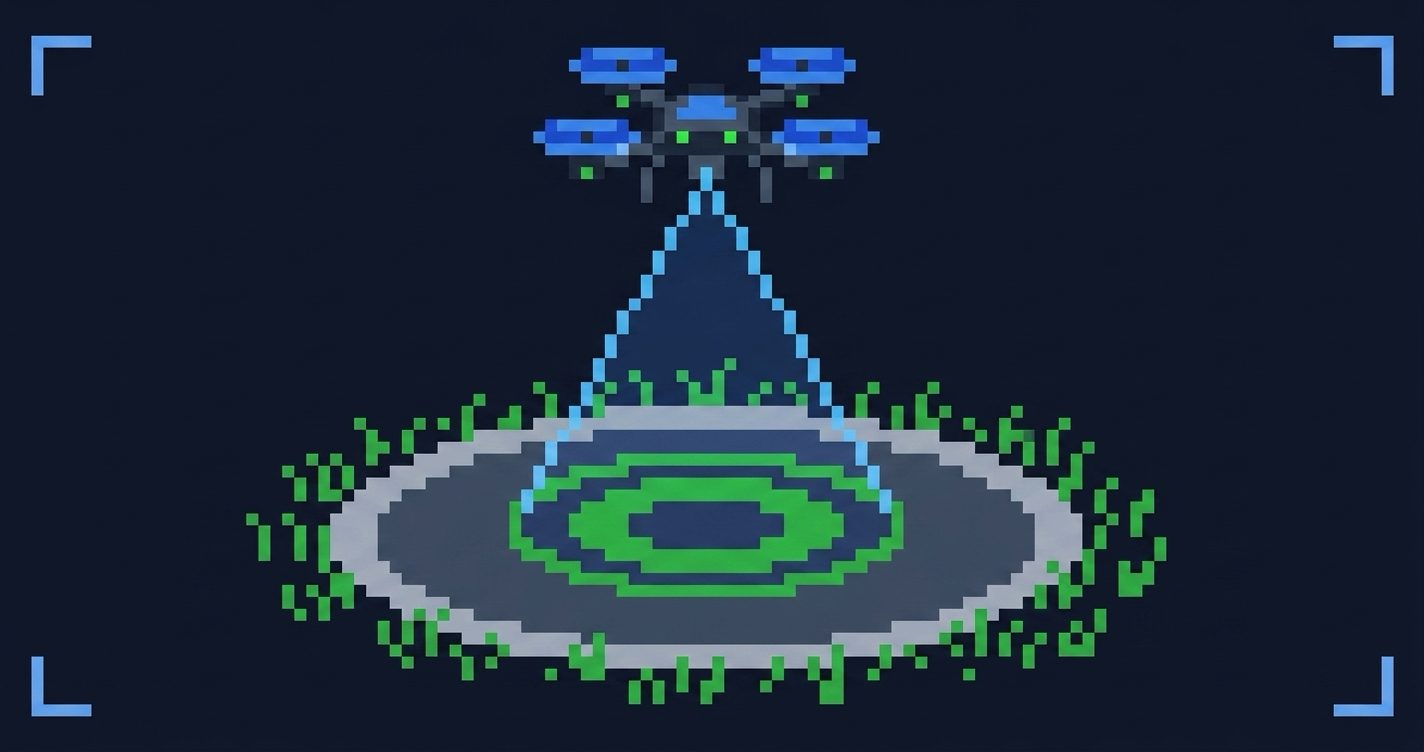
Short answer: no, you don’t strictly need one — a drone will happily take off from a clean patch of tarmac. But a landing pad is one of the cheapest bits of kit that stops the expensive bits of your drone getting wrecked, and on most UK surfaces it earns its place in the bag. If you fly off grass, gravel, mud, sand or a dusty car park, the honest answer swings to yes.
A pad isn’t there to make the drone fly better. It’s there to protect the parts that live within a few centimetres of the ground on take-off and landing: the downward camera, the gimbal, the obstacle sensors and the props. Here’s when that protection actually matters and when it’s just extra faff.
What a landing pad actually protects
Every consumer drone has its most delicate hardware pointing down. On take-off and landing, that hardware is right in the firing line.
- The gimbal and lens. On a Mini-class drone the camera sits low at the front. Land in long grass or on gravel and a blade or a stone can catch the gimbal arm or scratch the lens. A bent gimbal is a repair bill; a scratched lens shows up on every shot after.
- The downward sensors. Drones use downward vision sensors and an infrared or ToF sensor to hold position and judge height. Kick up dust, sand or grass clippings and those sensors get coated or confused — the drone can drift, bounce the landing, or refuse to hold a steady hover.
- The intakes and motors. Motors pull air (and whatever’s floating in it) straight through. Fine grit and sand are abrasive and shorten motor life. More on that in the rundown of surfaces that quietly wreck drones.
- The props. A prop strike on a stone or a clod of earth chips the blade, and a chipped prop vibrates — which shows up as jittery footage before it shows up as a crack.
A pad gives all of that a clean, flat, known surface to work off. That’s the whole job.
When you genuinely want one
Reach for the pad in these situations and you’ll be glad you did:
- Grass of any length. Even a mown lawn hides dips, and longer grass will foul props on a low hover. The blades also whip up clippings into the sensors.
- Loose ground — gravel, shingle, sand, dry soil. This is the worst case. The downwash blasts loose material outward and upward, straight into the motors and lens. Beaches are the extreme version — see flying a drone at the beach for why salt and sand together are brutal.
- Wet or muddy ground. Water and electronics are not friends, and a drone that’s picked up a coat of mud on the underside is a drone you’re now cleaning by hand.
- A blowy day, on any surface. In gusty conditions you want the most stable, predictable launch you can get. A weighted pad gives you a clean reference and a marked spot for Return-to-Home to aim at.
There’s a second, underrated benefit: the pad is a visual marker. Bright orange or with a landing “H” printed on it, it gives Return-to-Home a clear target and gives you a spot to walk back to when the drone is a dot in the sky.
When you can happily skip it
A pad isn’t compulsory, and there are plenty of times it’s just something extra to carry:
- Clean hard surfaces — a patio, a flat rooftop, a quiet stretch of dry tarmac, a decking board. If it’s flat, solid and free of loose grit, the drone is fine straight off it.
- When you hand-launch and hand-catch. A confident hand take-off and catch bypasses the ground entirely, which is genuinely the cleanest option — though it carries its own risks with spinning props. We cover the technique properly in the safe take-off and landing guide.
- Sub-250g drones on decent ground. The lightest drones kick up less, sit lower, and are cheaper to repair — so the maths tilts a little more towards “just launch it”. You still don’t want to land a Mini in gravel, mind.
Choosing and using one
Most pads are collapsible fabric discs held flat by a sprung wire rim — they twist down into a pouch the size of a dinner plate. Size is the main choice: a 50cm–75cm pad suits Mini and Air-class drones; go bigger if you fly something heavier or land imprecisely. Double-sided ones (a bright colour on one face, an “H” or a grid on the other) let you pick visibility or a calm background for the downward camera.
The single most important thing is to weigh it down. An unpegged pad in even a light breeze will flip up into your props on take-off — worse than no pad at all. Every decent pad has ground pegs or loops; use them, or drop your car keys, a couple of tent pegs or a bag on the edges. On a windy day this is non-negotiable.
Pick the right pad for your drone and surfaces, and it becomes the thing you set down without thinking — which is exactly what the best drone landing pads guide is for.
FAQ
Do I really need a landing pad, or is it a gimmick?
It’s genuinely useful, not a gimmick — but it’s not compulsory. Off clean tarmac or a patio you can skip it. Off grass, gravel, sand, mud or on a windy day it protects your gimbal, sensors and motors from grit and moisture, and gives Return-to-Home a clear target. For most UK flyers who launch from parks and fields, a pad pays for itself the first time it stops a stone hitting the lens.
What size landing pad should I get for a DJI Mini?
A 50cm to 75cm pad is plenty for a Mini or Air-class drone — big enough to give you margin for an imperfect landing without being awkward to carry. Only go for a larger 110cm pad if you fly something heavier or your landings tend to wander. Whatever the size, make sure it comes with pegs so you can anchor it in wind.
Can I use a landing pad in windy conditions?
Yes, and it helps — but only if it’s pegged down. An unweighted pad will lift in a gust and can flip straight into your props on take-off, which is worse than launching from bare ground. Use the supplied pegs or weigh the edges with keys, tent pegs or a bag. In strong wind, also reconsider whether you should be flying at all, as covered in the wind guide.
Does a landing pad protect the downward sensors?
That’s one of its main jobs. On loose surfaces like sand, dust or dry soil, the drone’s downwash blasts material up into the downward vision and infrared sensors, which can make it drift or bounce the landing. A clean, flat pad stops that, giving the sensors a stable surface to judge height and hold position against.