What Roof Problems Can a Drone Actually Spot?
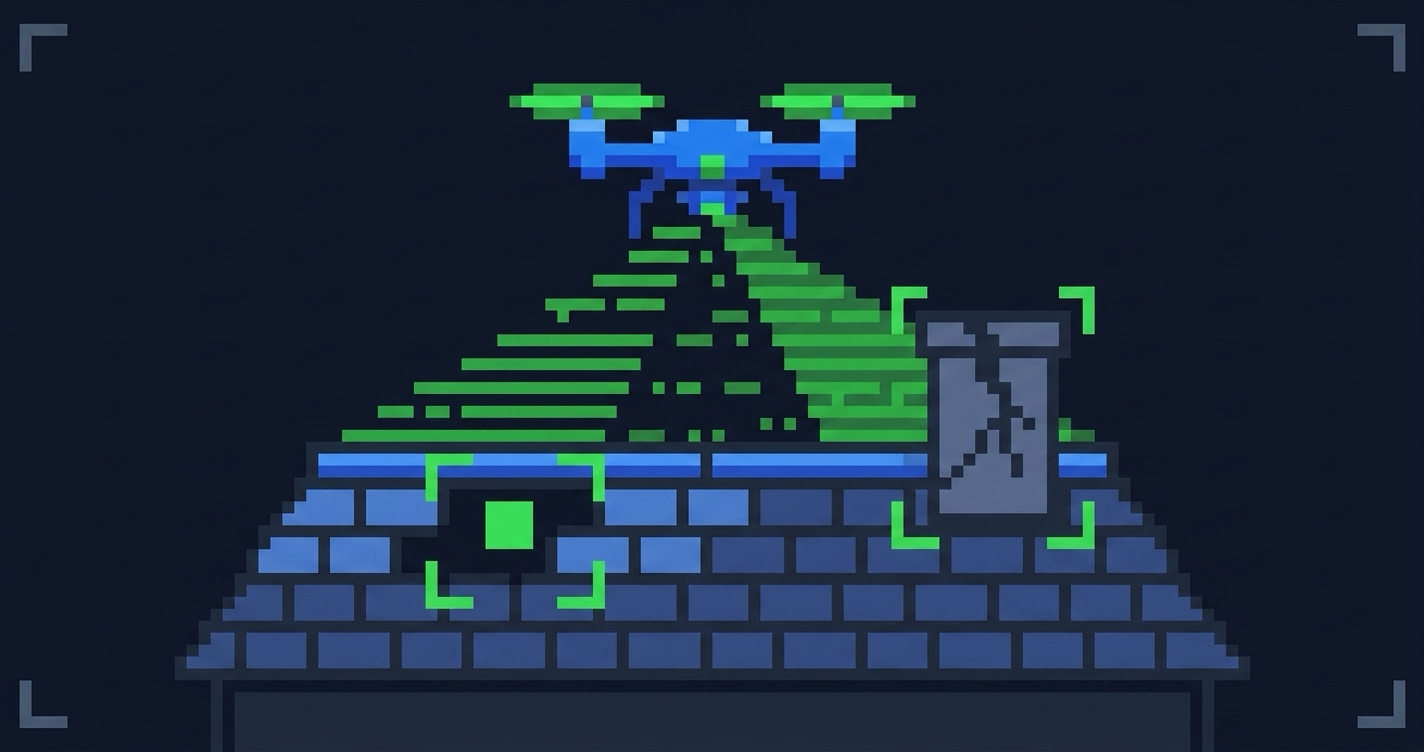
A drone is very good at finding anything wrong on the surface of a roof — slipped and cracked tiles, missing ridge mortar, lifted or split flashing, blocked valleys, moss load and damaged lead. If a person standing on the roof could see it, a decent camera drone flown close can see it too, without the ladder, the scaffold or the risk. What it can’t do is see through the tiles, feel whether the timber underneath has gone soft, or tell you for certain whether a hairline crack matters. It catches symptoms brilliantly and diagnoses causes only partly.
That split — reliable at spotting, limited at judging — is the whole story of drone roof inspection. Here’s what falls on each side.
What a drone catches easily
These are the finds a drone flags on almost every job — they show plainly from the air once you get the camera close and the light right.
- Slipped, cracked and missing tiles or slates. The bread and butter. A single slipped tile is a leak waiting to happen, and it stands out against the neat courses around it.
- Ridge and hip problems. Cracked or missing mortar along the ridge, or a ridge tile worked loose. Common, cheap to fix early, expensive to ignore.
- Flashing faults. The metal and lead seals around chimneys, against walls and around anything penetrating the roof. Lifted, split or corroded flashing is a frequent cause of a leak, and it photographs well.
- Blocked valleys and gutters. Leaf litter and moss packed into a valley or hopper backs water up under the tiles. From above, a clogged valley is obvious in a way it never is from the ground.
- Moss and organic growth. Heavy moss holds water against the tile laps and, on some coverings, lifts them. A drone maps where it’s worst.
- Storm damage. After a gale, a drone gives you dated images of lifted or displaced tiles fast — while the weather event is recent enough to matter for a claim.
For the detail of how you capture all this — the passes, the overlap, the low light — see how to photograph a roof with a drone properly. Coverage turns “I flew over the roof” into “I found the problem”.
What needs a closer look
A drone reports the surface. It can’t touch the fabric, and a lot of what decides a roof’s real condition is tactile or hidden.
- Soft or rotten timber. A drone sees a sagging line and infers trouble underneath. It can’t prod a rafter, lift a tile to check the batten, or tell you the felt below has perished. Confirming that needs hands.
- The state of the felt or underlay. The membrane under the tiles does the real waterproofing on many roofs, and it’s invisible from above. Tiles look immaculate over failed felt.
- Whether a crack is live or cosmetic. A hairline in chimney flaunching might be twenty years stable or actively letting water in. The photo shows the crack, not the movement.
- Internal leak tracing. Water travels along battens and rafters before it drips, so the wet patch in the bedroom is rarely under the actual defect. That’s an inside job. (Thermal imaging over the outside can narrow damp down — but it’s an add-on, not the standard photo survey.)
None of this makes the drone survey pointless — it makes it the first step. You find the surface faults from the air cheaply, then send someone up only if the pictures say you need to. That’s the opposite of the usual order, where scaffolding goes up to find out whether scaffolding was needed. We’ve done the maths in drone survey vs scaffolding: the £1,000 question.
The false alarms to watch for
Drone photos can also cry wolf, and knowing the common false positives saves you a panicked phone call to a roofer.
Wet roofs lie. Rain-soaked slate and damp felt photograph like damaged slate and failed felt. Every dark streak looks like ingress. Shoot a dry roof, or read the images knowing the weather they were taken in.
Old repairs look like defects. A patch of newer tiles, replaced mortar, a lead flashing aged to a different colour — all read as “something’s wrong” to an untrained eye when they’re actually where something was already put right.
Shadow and moss exaggerate. A shadow across a valley can look like a gap; a smear of moss like a crack. Low light reveals real faults but also throws confusing shadows, which is why interpretation matters as much as capture.
This is exactly why a photo pack and a report aren’t the same thing. Anyone can hand you images; a proper survey tells you which dark mark is a problem and which is a stain. The difference is laid out in what’s actually in a drone roof report.
When to escalate to a professional
Fly your own roof for reassurance, by all means. Escalate to a vetted, insured pilot when the answer has to hold up to someone else — an insurer wanting storm-claim evidence, a buyer or lender wanting a condition report, or a roofer you want quoting against a defined defect list. Those parties want a named operator, credentials and an annotated report, not homeowner phone stills.
That’s the job a drone roof survey is built for: same aerial view, plus the qualification, insurance and structured report that make the findings usable as evidence.
FAQ
Can a drone find a roof leak?
It can find the likely cause — a slipped tile, cracked flashing or blocked valley — but not always the leak itself, because water travels under the roof before it drips inside. A drone spots the surface faults water gets in through; tracing where it ends up usually needs an internal look, and sometimes thermal imaging over the outside to narrow down the damp.
Can a drone see under roof tiles?
No. A drone photographs the surface. It can’t see the felt or underlay beneath the tiles, check the battens, or inspect the timber — and on many roofs the membrane underneath is what actually keeps water out. Tiles can look perfect over failed felt, which is why a clean drone survey isn’t a guarantee the roof is sound underneath.
Is a drone survey accurate enough to trust?
For spotting surface defects, yes — a close, well-lit drone pass reliably catches what a person on the roof would see. For measurements and grid-accurate mapping it depends on the kit and method, which we cover in how accurate a drone survey is. For a condition check, sub-centimetre image detail matters far more than survey-grade positioning.
What can’t a drone tell me about my roof?
Whether a crack is live or stable, whether the timber underneath has rotted, the state of the felt, and where an internal leak actually originates — all of these are hidden or tactile, and a camera can’t reach them. A drone narrows the search brilliantly; confirming the diagnosis on those points still needs someone up there or inside.
If your roof needs the surface checked properly, start with the right tool — our guide to the best drones for roof inspection covers the cameras that resolve a cracked tile from the air.