What Is a Selfie Drone? Self-Flying Cameras Explained
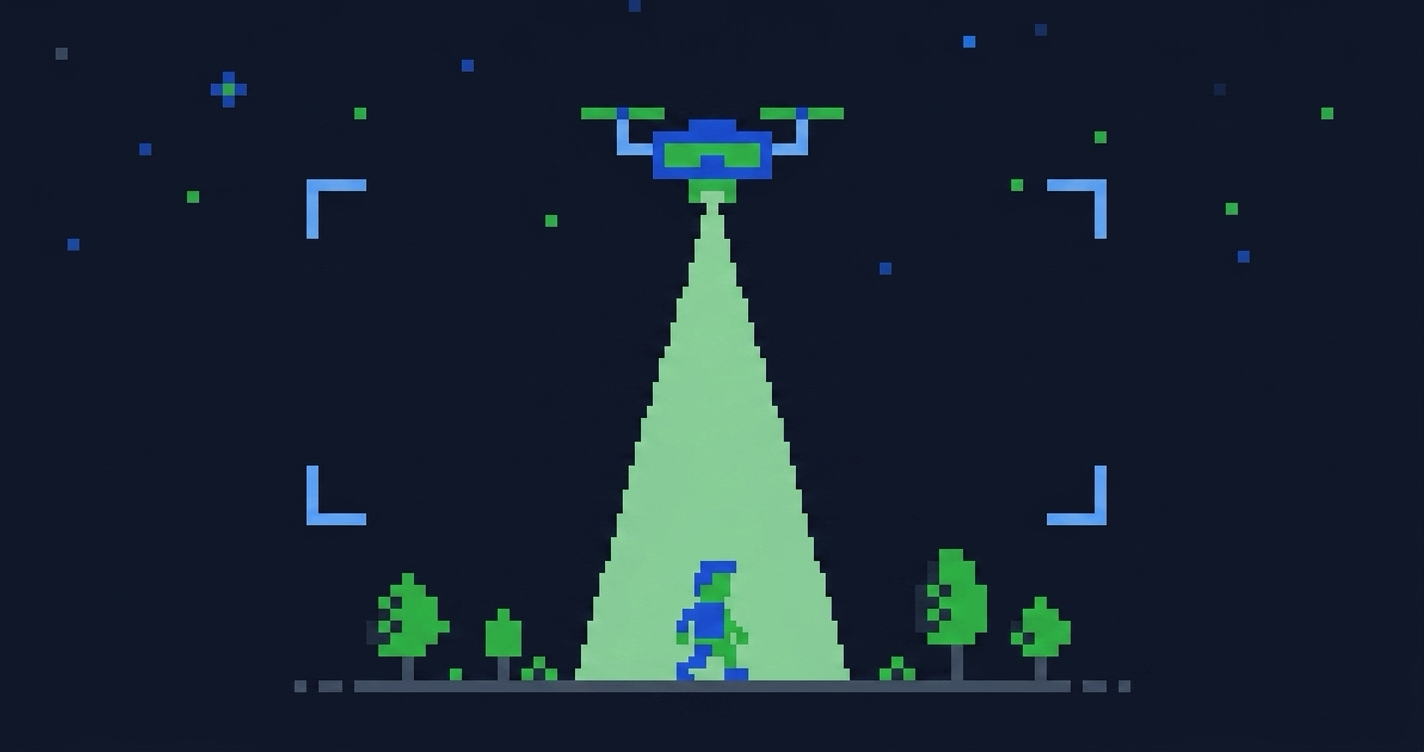
A selfie drone is a small, self-flying camera that films you without you having to pilot it. You hold it in your palm, it lifts off, it follows you or orbits you while you do something — walk, ride, ski, stand there looking moody — and then it comes back and lands in your hand. No sticks, no controller, no learning curve. If a normal drone is an aircraft you fly, a selfie drone is a camera that flies itself.
They’re a distinct little category, and DJI’s Neo is the drone that made them cheap and mainstream. If you’ve seen someone get a swooping aerial shot of themselves with no visible controller and wondered how, this is the answer.
How a selfie drone actually works
The magic is subject tracking. The drone uses its camera and software to lock onto a person — you — and keep you framed as it moves. You pick a pre-set move from an app or a button on the drone: a “dronie” that pulls up and away to reveal the scene, an orbit that circles you, a fly-along that tracks you from behind. The drone flies the whole move itself and keeps the camera pointed at you throughout.
The launch and landing are the other half. Most selfie drones lift straight off your open palm and land back on it, removing the two moments beginners find scariest, and built-in propeller guards mean catching one mid-air doesn’t shred your fingers. Someone who has never touched a drone can get a decent clip within a minute of unboxing.
You’re not really flying in the traditional sense. You can usually fly one manually through an app or an optional controller, but that’s not the point — the point is that it does the flying so you can concentrate on being in front of it.
What selfie drones are good at
They’re built for one job and they do it well: hands-free footage of you and your activity, close in, with minimal effort. Action sports, travel clips, a group shot from above at a barbecue, a nice reveal shot on a walk — anything where you want to be in the shot rather than behind the controls. Because they’re tiny and light, they’re also unintimidating to fly around people and easy to throw in a bag.
There’s a legal bonus too. The best-known selfie drones are deliberately built under 250g, which puts them in the friendliest bracket of UK drone law — the A1 open subcategory, where you’re allowed to fly close to uninvolved people and only briefly over them (never over crowds). You’ll still need the free CAA Flyer ID for anything over 100g, and a camera drone needs an Operator ID (£12.34 a year) too, but staying under 250g is what keeps you in that people-friendly bracket. That 250g line is genuinely one of the most important numbers in UK drone rules, and it’s a big part of why this whole category is designed the way it is. If you want the two-minute version of what you have to sort, do I need a licence to fly a drone covers it.
Where selfie drones fall down
The trade-offs all come from being small and cheap. Cameras are decent but not flagship — smaller sensors, and on the entry models a single-axis gimbal with a fixed camera tilt leaning on electronic stabilisation, versus the freely adjustable mechanical gimbal pricier models add, which limits how smooth and flexible your framing can be. Flight times are short — high teens of minutes per battery, less in the real world — so spares are a must. And being feather-light, they get shoved around by wind, so most are calm-conditions tools rather than something for a gusty British afternoon.
The other big variable is obstacle sensing. The cheapest selfie drones have none, which is awkward for a device whose whole job is to follow you — it’ll track you straight into a tree if you’re not careful. Pricier ones add sensing that lets the drone dodge obstacles while it tracks, which is the difference between a fun toy and one you can trust in a cluttered spot. This is exactly the gap between DJI’s two Neo models, and the DJI Neo vs Neo 2 comparison shows what that upgrade buys you.
The main options in 2026
DJI dominates this space, and its sub-250g line splits into two ideas:
- The DJI Neo and Neo 2 are the purest selfie drones — palm launch, follow modes, controller-free by default. The original Neo is the cheapest, lightest way in; the Neo 2 adds obstacle sensing, a mechanical gimbal and longer-range transmission for people who want the tracking to be genuinely reliable.
- The DJI Flip is a slightly different animal — a folding drone that also flies itself for hands-free shots but carries a bigger sensor and a proper controller option, sitting closer to a full camera drone. If you’re weighing the folding, camera-first approach against the pure palm-launch one, the DJI Flip vs DJI Neo 2 comparison is the head-to-head.
If you’re not sure which featherweight suits you — the pure selfie Neo, the more capable Flip, or a full Mini camera drone — which DJI sub-250g drone you should buy lays the whole line-up side by side.
Is a selfie drone right for you?
Buy one if you want to be in your own footage, you value hands-free simplicity over ultimate image quality, and you’ll mostly fly in calm, open conditions. It’s also a gentle entry point for someone nervous about flying, or a supervised first drone for an older child, thanks to the guards and the palm launch.
Look elsewhere if you want to actually learn to pilot, shoot footage that holds up on a big screen, fly at distance, or fly reliably in wind. At that point you want a full camera drone — a Mini-class model with a real gimbal, range and wind resistance the selfie category isn’t built to provide.
FAQ
What’s the difference between a selfie drone and a normal drone?
A selfie drone flies itself to film you — palm launch, automatic follow and orbit moves, controller-free. A normal camera drone is one you pilot manually with a controller for more control, range and image quality. Selfie drones trade capability for effortlessness.
Do selfie drones need registration in the UK?
If they have a camera, yes — you need a CAA Operator ID (£12.34 a year), which most do. You’ll also need the free CAA Flyer ID test, since that’s required for any drone over 100g and nearly all popular models are heavier than that. Staying under 250g doesn’t skip the Flyer ID — what it buys you is the friendlier A1 rules on flying near people.
Are selfie drones good in wind?
Generally no. They’re very light, so wind pushes them around and footage gets shaky. Most are rated only for a moderate breeze and are best treated as calm-conditions tools — check the forecast before you fly one.
Which is the best selfie drone to buy?
For most people it’s one of DJI’s Neo models — the original Neo for the cheapest way in, the Neo 2 for reliable obstacle-avoiding tracking and a better camera. The folding DJI Flip is worth a look if you want something closer to a full camera drone.
If a self-flying camera sounds like your thing, the next step is picking the model — start with the DJI Neo vs Neo 2 comparison to settle which self-flying version is the right buy.