DJI Flip: What It Is and What It's For
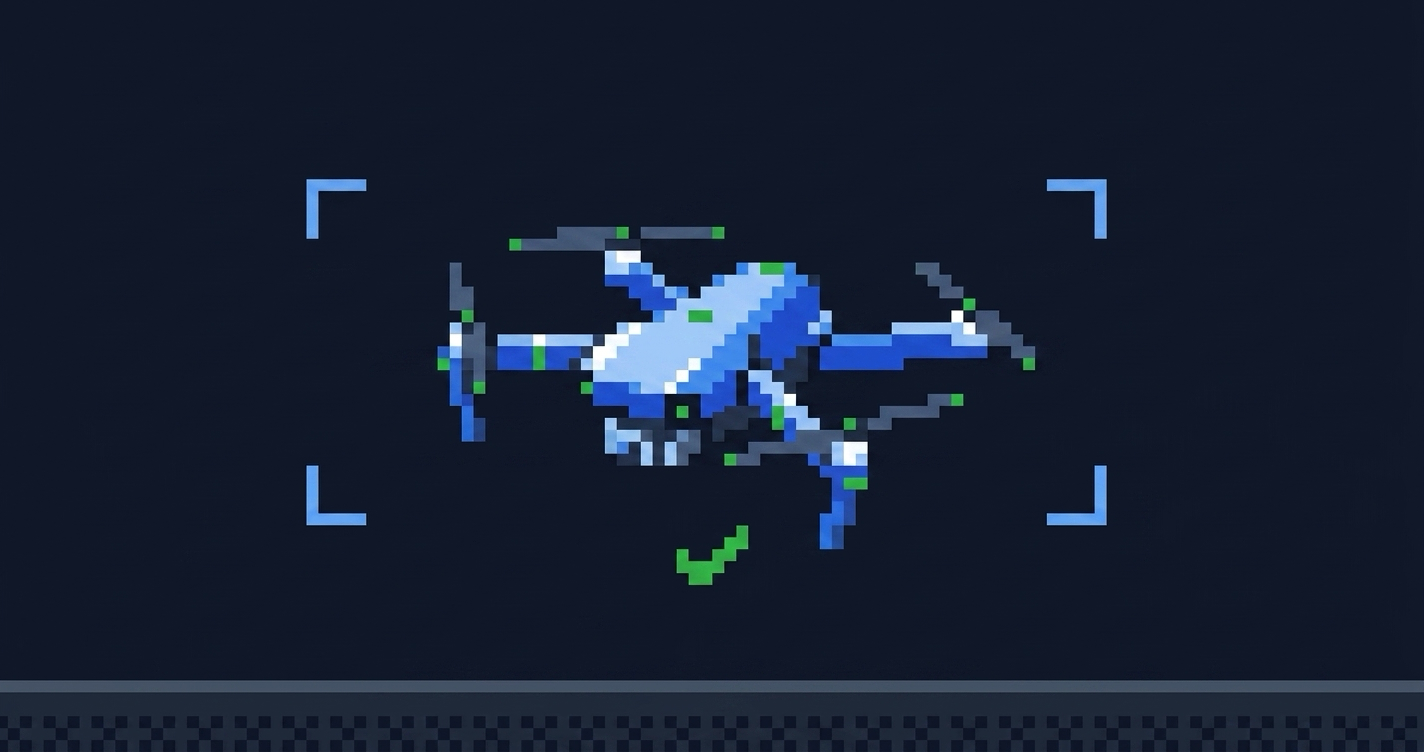
The DJI Flip is a sub-250g folding camera drone with one trick that sets it apart from everything else DJI makes: full-coverage propeller guards built in, so the blades are caged the whole time it’s flying. That, plus the ability to launch off your palm without touching a controller, makes it the friendliest drone DJI has ever put out for someone nervous about the whole idea. It is not a toy, though — under those guards sits the same class of camera as DJI’s more serious mini drones.
So it sits in an odd, useful gap: safer and simpler than a proper camera drone, but far more capable than a selfie flyer. Here’s what it does, who it suits, and where the caged design costs you something.
The folding, caged design
The Flip’s headline feature is its propellers. DJI’s first drone with props that fold down and stack together, it wraps each rotor in a lightweight guard so the blades never sit exposed. Fold it up and it’s roughly the size of a paperback; unfold the arms and the guards click into a cage around the whole aircraft.
That cage does two jobs. It makes the Flip genuinely safe to fly close to people and indoors — bump a wall or a shoulder and nothing gets cut or snapped. And it makes palm launch practical: you hold the drone flat on your hand, it spins up inside the guards, and lifts off without you fumbling for a controller. Ground takeoffs are awkward, because the guards sit low and snag on grass, so palm launch is less a gimmick than the way you’re meant to fly it.
The guards do add drag, which matters later. But the design makes clear who DJI built this for: people who want a real camera in the air without the anxiety of spinning blades.
The camera
This is where the Flip stops being a beginner novelty. It carries a 1/1.3-inch sensor — the same size class DJI puts in its well-regarded mini drones — shooting 4K HDR video and 48-megapixel stills, with a wide, bright lens. For a sub-250g drone with prop guards, that is a lot of camera.
Footage holds up in daylight and stays usable as the light drops in a way selfie drones can’t match. Where it gives ground to DJI’s pricier minis is the gimbal: the Flip’s camera doesn’t tilt into a true vertical position, so upright clips come from a crop rather than the full sensor — a footnote for most, worth knowing if you live in vertical video. The gap between this and a fixed-lens selfie drone is covered in what a selfie drone actually is.
Hands-free flying and subject tracking
The Flip will fly itself. Point it at yourself, choose a QuickShot or turn on subject tracking, and it’ll take off, frame you, and pull off orbits, fly-aways and follow moves while you get on with whatever you’re doing. Tracking keeps a moving subject in shot — walking, cycling, running.
One honest limitation: the Flip’s obstacle sensing points forward only, and it switches off during active tracking. So a follow shot along a wooded trail or past fences carries real crash risk, because the drone isn’t watching for anything while it chases you. In an open field, tracking is a delight. Threading trees, it is not.
When you do want to fly it properly — frame a landscape, hold a shot in a light breeze — pairing it with a screen controller unlocks a long, stable transmission range gestures alone can’t reach.
Who the Flip is for (and who should look elsewhere)
The Flip suits a specific person: someone who wants aerial and hands-free footage, values flying safely near people and indoors, and doesn’t want the stress of exposed props or a steep learning curve. New parents filming the kids, vloggers, cautious first-timers, anyone buying for a household rather than a hobby — this is squarely their drone.
Who should look past it? Two groups. If you mainly want to film yourself doing sport with the smallest possible drone, a pure selfie flyer is lighter and simpler. And if the footage is the entire point and you’ll fly in open sky where obstacle protection and true vertical video matter, DJI’s step-up minis earn their higher price. That trade — caged simplicity versus a more capable open drone — is exactly the decision in Flip vs Mini. Weighing it against the hand-launch selfie drone instead? The Flip vs Neo 2 comparison is the one to read, and the whole featherweight range is laid out in which DJI sub-250g drone to buy.
The trade-offs, stated plainly
Nothing’s free. The prop guards that make the Flip safe also add drag. Real-world flight time lands well short of the headline figure once the guards are fighting the air — plan for the low-to-mid twenties of minutes per battery, not the number on the box. That same drag costs wind stability: the Flip is happiest in calm to light breeze and gets pushed around sooner than a bare drone of the same weight. In gusty British conditions that’s a genuine constraint — worth reading up on flying a drone in wind before a blowy day.
Being under 250g is the Flip’s other quiet advantage. It doesn’t get you out of registration — it buys flying freedom: in the A1 open subcategory you can fly close to uninvolved people and only briefly, incidentally over them (never over crowds). On the paperwork, the Flip is over 100g, so you do need a free CAA Flyer ID (a short online theory test), and because it has a camera you also need an Operator ID at £12.34 a year, displayed on the aircraft — exactly the sort of detail beginners miss.
FAQ
Is the DJI Flip a beginner drone or a proper camera drone?
Both, which is the point. Its prop guards, palm launch and hands-free modes make it about as beginner-friendly as drones get, but the camera under those guards is genuine — a large-for-its-class sensor shooting 4K HDR. It’s the rare drone that a nervous first-timer and someone who wants real footage can both be happy with.
Does the DJI Flip need a licence or registration in the UK?
Yes, on both counts. At around 249g the Flip is over 100g, so you need a CAA Flyer ID — a free online theory test — to fly it. And because it has a camera, you also need an Operator ID, which costs £12.34 a year and gets displayed on the aircraft. Being under 250g doesn’t skip either of those; what it buys you is the freedom to fly closer to people. So there’s a short test to sit and a registration step, and neither can be skipped.
How long does the DJI Flip actually fly on one battery?
DJI’s headline figure is optimistic for this drone specifically, because the full-coverage prop guards add drag. In real flying, plan for somewhere in the low-to-mid twenties of minutes per battery. A spare or two is close to essential if you want more than a quick session.
Can the DJI Flip film me while I’m moving?
Yes — subject tracking and QuickShots will follow you hands-free. The important caveat is that its obstacle sensing faces forward only and turns off during tracking, so keep follow shots to open space. In a clear field it tracks beautifully; near trees, fences or trails it can’t see what it’s flying into.
Weighing the Flip against DJI’s hand-launch selfie drone? The honest side-by-side is in our DJI Flip vs DJI Neo 2 comparison — start there before you buy.